
Home›Our Practice›Technology and Comfort
Our Practice
Dental Technology and Comfort
Technology with a purpose.
Modern dental technology can help us gather better information, explain findings more clearly and plan treatment with greater precision.
At Dentistry Thirty Two, technology is used to support thoughtful care, not replace the human side of dentistry.
Why Technology Matters
Better information can support better conversations.
Dental technology can provide useful information that may not be visible during a routine clinical examination.
Digital imaging, scanning and other tools can help the dental team assess oral structures, plan treatment and explain findings more clearly.
At Dentistry Thirty Two, these tools are used alongside clinical judgment, communication and individualized treatment planning.
Three Principles
See More Clearly
Digital tools can help provide additional information about teeth, roots, bone and other oral structures.
Explain More Clearly
Images and scans can help patients better understand what the dental team is seeing.
Plan More Thoughtfully
Digital information can support treatment planning when appropriate.
Digital Imaging
A closer look when more information is needed.
Digital dental X rays can help provide information about areas that cannot be assessed fully with a visual examination alone.
Depending on the clinical situation, imaging may help evaluate tooth decay, roots, bone levels, developing teeth and existing dental work.
Digital imaging also allows information to be reviewed quickly and discussed with you during the appointment.
Imaging should be recommended based on individual clinical need.
Digital Scanning
Comfortable impressions without the traditional mess.
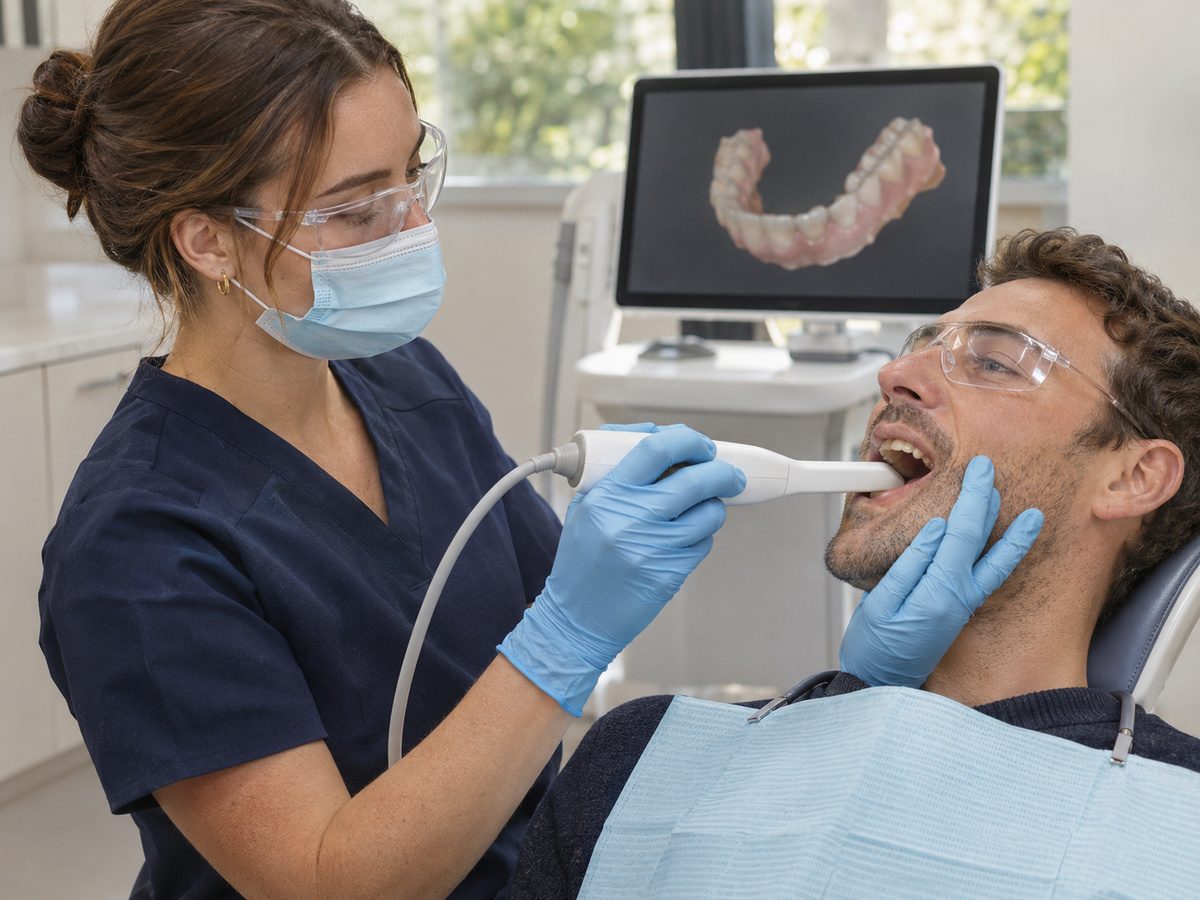
Digital scanning can be used to create detailed three dimensional representations of the teeth and bite without relying on conventional impression material in many situations.
A small scanner is moved around the mouth while the system captures digital information.
This can support treatment planning for services such as Invisalign and other restorative or cosmetic procedures where digital records are appropriate.
Treatment Planning
Technology informs the conversation. It does not replace it.
Digital tools can support treatment planning by providing additional information about your teeth, bite and surrounding structures.
The value of that information comes from how it is interpreted and discussed.
Your dentist considers the clinical findings, your concerns, treatment options, comfort and priorities before recommending a next step.
Technology supports the process. It does not replace professional judgment or patient choice.
Comfort Focused Care
A more comfortable visit starts with how care is delivered.
Comfort is not only about equipment.
It begins with communication, clear expectations and knowing what is happening during your appointment.
Our team aims to create an environment where patients feel able to ask questions, understand their options and communicate if they need a pause or additional explanation.
Clinical tools and techniques may also help make certain procedures more efficient and easier to understand.
Clear Communication
Know what is happening and why.
Your Pace
Take the time you need to ask questions.
Comfort Throughout
Let the team know if something feels uncomfortable.
Thoughtful Planning
Understand the next step before moving forward.
How It Comes Together
A modern appointment should still feel personal.
Listen
We begin with your concerns, questions and priorities.
Assess
Clinical examination and appropriate technology help us gather information.
Explain
We review what we see and discuss what it may mean.
Plan
You receive clear information about the next steps and available options.
Technology at Dentistry Thirty Two
Tools we may use as part of your care.
Digital X Rays
Support examination and assessment when additional information is needed.
Digital Scanning
Create detailed digital records of the teeth and bite in appropriate cases.
3D Treatment Planning
Support planning for selected treatments where three dimensional information is useful.
Digital Patient Education
Use images and scans to help explain findings and treatment options more clearly.
Technology and Comfort FAQs
Common questions about dental technology.
Why does Dentistry Thirty Two use digital dental technology?
Digital tools can help provide additional clinical information, support treatment planning and make it easier to explain findings to patients. They are used when appropriate as part of a broader clinical assessment.
Will I need dental X rays at every visit?
Not necessarily. Dental imaging should be recommended according to your individual clinical needs, dental history, symptoms and the information required for assessment.
What is a digital dental scan?
A digital dental scan uses a small intraoral scanner to capture detailed images of the teeth and bite. The information can be combined to create a three dimensional digital model.
Are digital scans more comfortable than traditional impressions?
Many patients prefer digital scanning because it may avoid the need for conventional impression material in situations where scanning is appropriate.
Does technology replace a dental examination?
No. Technology provides information that supports clinical assessment. Your dentist still relies on examination, professional judgment and discussion with you when making treatment recommendations.
How does technology improve the patient experience?
Digital information can make it easier to visualize findings, discuss treatment options and understand the reasoning behind a recommendation. Certain tools may also make parts of treatment planning more efficient.
Modern Care
Better tools. Clearer conversations. Thoughtful care.
Whether you are visiting for preventive care, exploring treatment or looking for help with a dental concern, our team can use appropriate technology to support a clearer understanding of your oral health.