
Protective Dental Care
Nightguards and Sports Guards in Maple Ridge
Custom dental guards can help protect teeth from repeated wear, clenching, grinding and certain sports related impacts.
At Dentistry Thirty Two, a guard can be planned around your bite, oral health and the reason protection is needed.
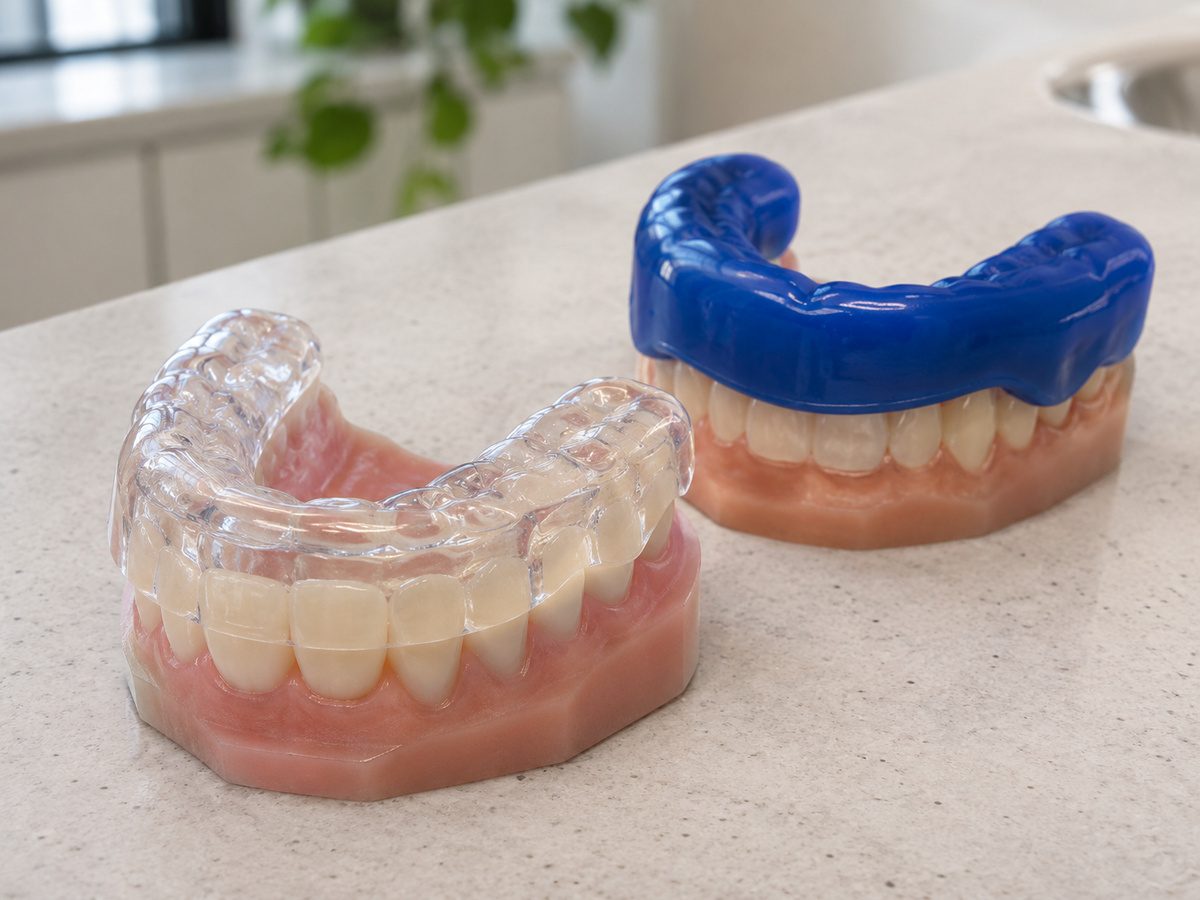
Protecting Your Teeth
Small forces can add up over time.
Teeth are designed to handle everyday chewing, but repeated clenching, grinding or sudden impact can place additional stress on them.
Depending on the situation, this may contribute to wear, small fractures, damaged dental work or discomfort involving the teeth and jaw.
A custom dental guard may be considered when your dentist identifies signs of wear, you report symptoms associated with clenching or grinding, or you participate in activities where dental protection is appropriate.
Wear
Repeated tooth contact may contribute to gradual surface wear.
Stress
Clenching and grinding can place additional load on teeth and restorations.
Impact
Sports related contact may increase the risk of dental injury.
Nightguards
Protection while you sleep.
A nightguard is a removable dental appliance designed to fit over the teeth and create a protective barrier between the upper and lower arches.
Nightguards may be considered for patients who clench or grind their teeth, especially when there are signs of wear, chipped teeth, damaged restorations or other concerns associated with repeated tooth contact.
A nightguard does not necessarily stop clenching or grinding. Its purpose is to help reduce direct contact between the teeth and protect the dental surfaces.
Upper arch · Guard layer · Lower arch
Clenching and Grinding
What might suggest a nightguard is worth discussing?
Visible Tooth Wear
Flattened or worn tooth surfaces may be associated with repeated tooth contact.
Chipped Teeth
Small fractures or chips may develop when teeth are repeatedly subjected to excessive force.
Damaged Dental Work
Fillings, crowns or other restorations may experience additional stress in some patients who clench or grind.
Morning Jaw Tension
Some people report jaw tightness or muscle fatigue after sleeping.
Grinding or Clenching History
You may be aware of clenching, or a partner may notice grinding sounds during sleep.
These signs do not confirm bruxism or any other diagnosis. A dental assessment is needed to determine whether a protective appliance may be appropriate.
Tooth · Guard layer · Impact disperses
Sports Guards
Protect your smile during contact and impact.
A sports guard is designed to provide cushioning around the teeth during activities where contact or falls may occur.
A properly fitted guard may help reduce the risk of certain dental injuries by providing a protective layer between the teeth and surrounding structures.
Custom guards are made to fit the individual mouth rather than relying on a universal shape.
Different Purposes
Two guards. Two very different jobs.
Nightguard
Designed For
Clenching and grinding protection
Typically Worn
While sleeping
Main Purpose
Reduce direct tooth to tooth contact and protect dental surfaces
Fit
Custom planned around the teeth and bite
Sports Guard
Designed For
Sports and activity related impact protection
Typically Worn
During relevant physical activity
Main Purpose
Provide cushioning around the teeth during contact or falls
Fit
Custom planned around the individual mouth
Why Fit Matters
A guard should work with your mouth, not against it.
Comfort and fit matter because a dental guard needs to remain in place while it is being worn.
A custom guard is made using information about your teeth and bite so the appliance can be designed for your individual mouth.
The exact design depends on whether the guard is intended for sleep, sports or another protective purpose.
Scan or Impression
Digital or Physical Model
Guard Design
Final Fit
What to Expect
From assessment to final fit.
Assess
Your dentist reviews your teeth, bite, dental work and the reason a guard is being considered.
Record
An impression or digital scan may be taken to capture the shape of your teeth.
Create
The guard is made according to the planned design and intended use.
Fit
The finished appliance is checked for fit, comfort and how it sits against the opposing teeth.
Looking After Your Guard
Good care can help your appliance last.
Dental guards should be cleaned regularly and stored properly when they are not being worn.
After use, follow the cleaning instructions provided by your dental team and allow the appliance to dry before placing it in its storage case.
Avoid exposing the guard to excessive heat, which may affect its shape.
Bring the appliance to dental appointments when recommended so the fit and condition can be reviewed.
Clean
Follow the recommended cleaning routine.
Dry
Allow the guard to dry before storage.
Protect
Store it safely away from heat and damage.
Review
Have the fit and condition checked when appropriate.
Ongoing Fit
Your mouth and your guard can change.
"Protection only works when the guard still fits properly."
A dental guard may eventually need adjustment or replacement.
Changes in the teeth, dental restorations, bite, growth or the appliance itself can affect how it fits.
Signs of damage, distortion, significant wear or an uncomfortable fit are reasons to have the appliance reviewed.
Children and teenagers using sports guards may require reassessment as their mouths develop.
Nightguard and Sports Guard FAQs
Common questions about dental guards.
What is a nightguard?
A nightguard is a removable dental appliance worn over the teeth to reduce direct tooth to tooth contact during sleep. It may be considered when clenching or grinding is contributing to tooth wear or other dental concerns.
Does a nightguard stop teeth grinding?
Not necessarily. A nightguard is primarily intended to protect the teeth from direct contact and repeated forces. It does not guarantee that grinding or clenching will stop.
How do I know if I need a nightguard?
Your dentist can assess your teeth, bite, restorations and symptoms to determine whether a protective appliance may be appropriate.
Is a custom sports guard different from a store bought mouthguard?
A custom sports guard is made using information about your individual teeth and mouth. Over the counter guards use more standardized shapes and fitting methods.
Can I use my nightguard for sports?
A nightguard and a sports guard are designed for different purposes. A nightguard should not automatically be used as a substitute for an appliance intended for sports related impact protection.
How long does a dental guard last?
Lifespan varies depending on the material, frequency of use, grinding or impact forces, oral changes and how the appliance is cared for. Your dental team can assess when adjustment or replacement may be appropriate.
How should I clean my dental guard?
Follow the cleaning instructions provided with your appliance. In general, the guard should be cleaned regularly, allowed to dry and stored in its protective case away from excessive heat.
Protect Your Smile
The right protection starts with the right fit.
Whether you are concerned about nighttime grinding, repeated tooth wear or protecting your teeth during sports, our team can assess your needs and discuss whether a custom dental guard may be appropriate.