
Gum Health
Gum Health and Gum Disease Care in Maple Ridge
Healthy gums are the foundation of a healthy smile.
Your gums help support and protect the structures around your teeth. When inflammation or periodontal problems develop, early assessment can help clarify what is happening and what care may be appropriate.
The Periodontal Foundation
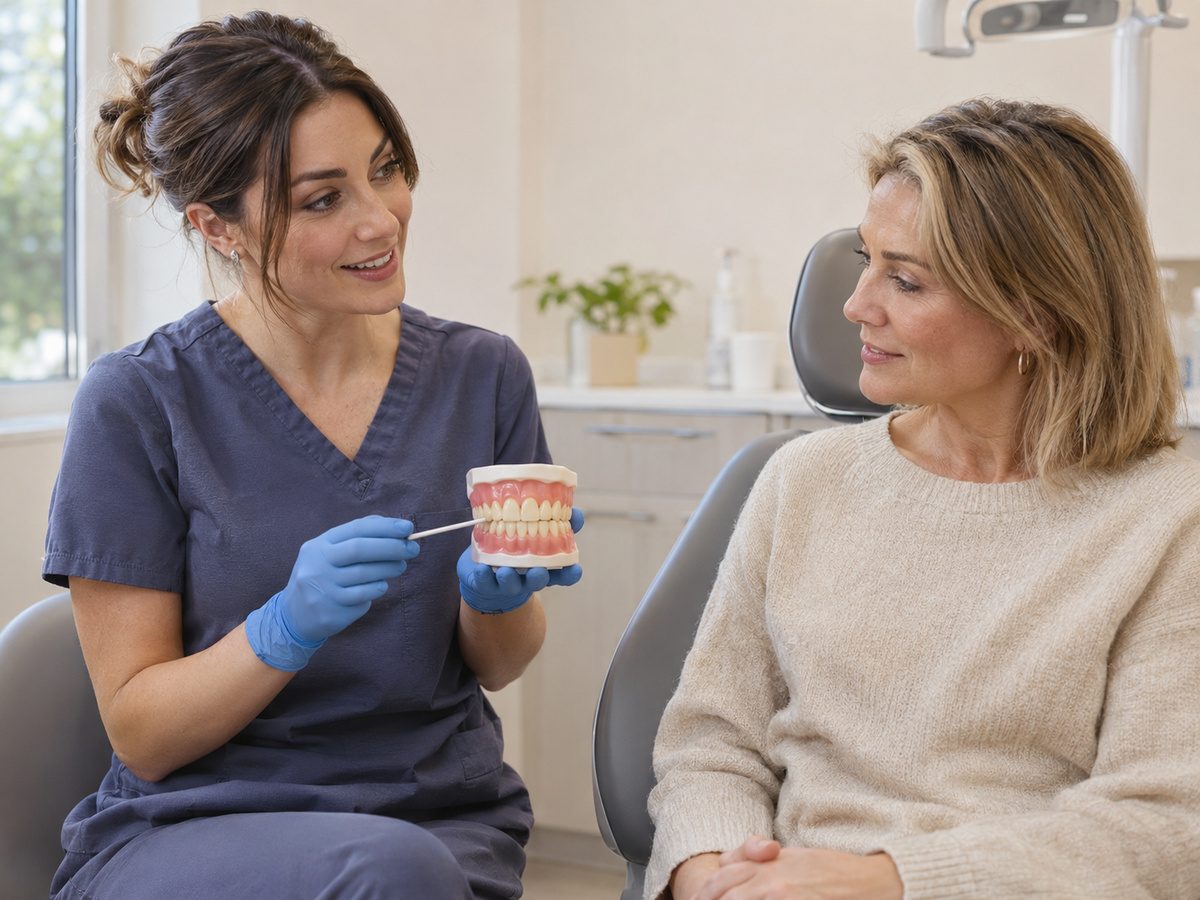
Understanding Your Gums
Gum health is about more than what you can see.
Healthy gums help form a protective seal around the teeth and support the structures beneath them.
When plaque and bacteria accumulate around the gumline, inflammation can develop. Gingivitis affects the gums and may cause redness, swelling or bleeding. When disease progresses into deeper supporting tissues, it is generally described as periodontitis.
Because periodontal changes are not always obvious, professional assessment can help determine what is happening beneath the surface.
Signs to Pay Attention To
Sometimes the first clues are small.
Bleeding
Gums that bleed during brushing or flossing can be associated with inflammation.
Redness or Swelling
Changes in colour, tenderness or swelling may indicate irritation or inflammation.
Gum Recession
When gum tissue moves away from the tooth, more of the tooth or root surface may become exposed.
Persistent Bad Breath
Persistent changes in breath can sometimes be associated with oral health concerns.
Tooth Mobility or Bite Changes
More advanced periodontal problems can affect supporting structures around teeth.
From Assessment to Clarity
Understanding what is happening comes first.
A gum health assessment can include evaluation of the gum tissues, areas around the teeth and other clinical findings relevant to periodontal health.
The information gathered helps your dental team understand the condition of the gums and supporting structures and discuss appropriate next steps where care is needed.
Assess
Evaluation of the gum tissues and areas around the teeth.
Measure
Where appropriate, periodontal measurements assess the spaces around the teeth.
Understand
Clinical findings connect into a clearer picture of periodontal health.
Plan
Appropriate next steps and ongoing care are discussed where needed.
Care Based on What We Find
Different situations can require different approaches.
The appropriate approach to gum health depends on the clinical findings and individual patient.
Preventive Care
Regular dental hygiene visits and daily oral hygiene can help manage plaque and support ongoing gum health.
Professional Cleaning
Professional dental hygiene care can remove deposits that are difficult to manage through brushing and flossing alone.
Periodontal Care
When deeper periodontal concerns are identified, additional care and ongoing monitoring may be recommended based on the clinical findings.
Between Visits
Gum health is supported both in the clinic and at home.
At Home
Daily care between visits
Consistent brushing and interdental cleaning can help manage plaque around the teeth and gumline between dental visits.
Ongoing Gum Health
In the Clinic
Professional assessment & hygiene
Professional assessment and dental hygiene care provide an opportunity to evaluate gum health, remove deposits and identify changes that may require attention.
Common Questions
Questions about gum health.
What are the early signs of gum problems?
Early signs can include gums that bleed during brushing or flossing, redness, swelling or tenderness. Because these changes are not always obvious, mentioning them to your dental team allows your gum health to be assessed appropriately.
Why do my gums bleed when I brush or floss?
Bleeding may be associated with gum inflammation, often related to plaque accumulation around the gumline. There can be other causes as well, so persistent bleeding is worth discussing with your dental team so your gums and home care can be reviewed.
Can gum recession grow back?
Gum tissue that has receded does not generally grow back on its own. Recession can have several possible causes, and a dental assessment can help identify what may be contributing and whether monitoring or treatment should be considered.
How is gum health assessed?
A gum health assessment can include visual evaluation of the gum tissues, assessment of the areas around the teeth and, where appropriate, periodontal measurements. The findings help your dental team understand the condition of the gums and supporting structures.
How often should I have my gums checked?
The appropriate interval depends on your current gum health, periodontal history, home care and individual risk factors. Some patients benefit from more frequent professional care, while others may be appropriately seen less often. Your dental team can recommend a schedule based on your needs.
What is the difference between gingivitis and periodontitis?
Gingivitis refers to inflammation of the gums without the deeper loss of supporting structures. Periodontitis is a more advanced form of gum disease involving the tissues and bone that support the teeth. Assessment helps determine which may be present and what care may be appropriate.
Your Gum Health
Concerned about a change in your gums?
If you have noticed bleeding, tenderness, recession or another change around your gums, an assessment can help clarify what is happening and whether care may be appropriate.