Gum disease is the leading cause of adult tooth loss in Canada — and it is largely preventable, and treatable when caught early. The challenge is that most people with early gum disease experience no pain and notice no obvious symptoms until the condition has progressed.
What gum disease actually is
Gum disease (periodontal disease) is a bacterial infection of the structures supporting your teeth — the gums, periodontal ligament and jawbone. It begins when bacterial plaque is not removed consistently from the gumline. If plaque is allowed to remain, it mineralizes into calculus (tartar) that cannot be removed at home.
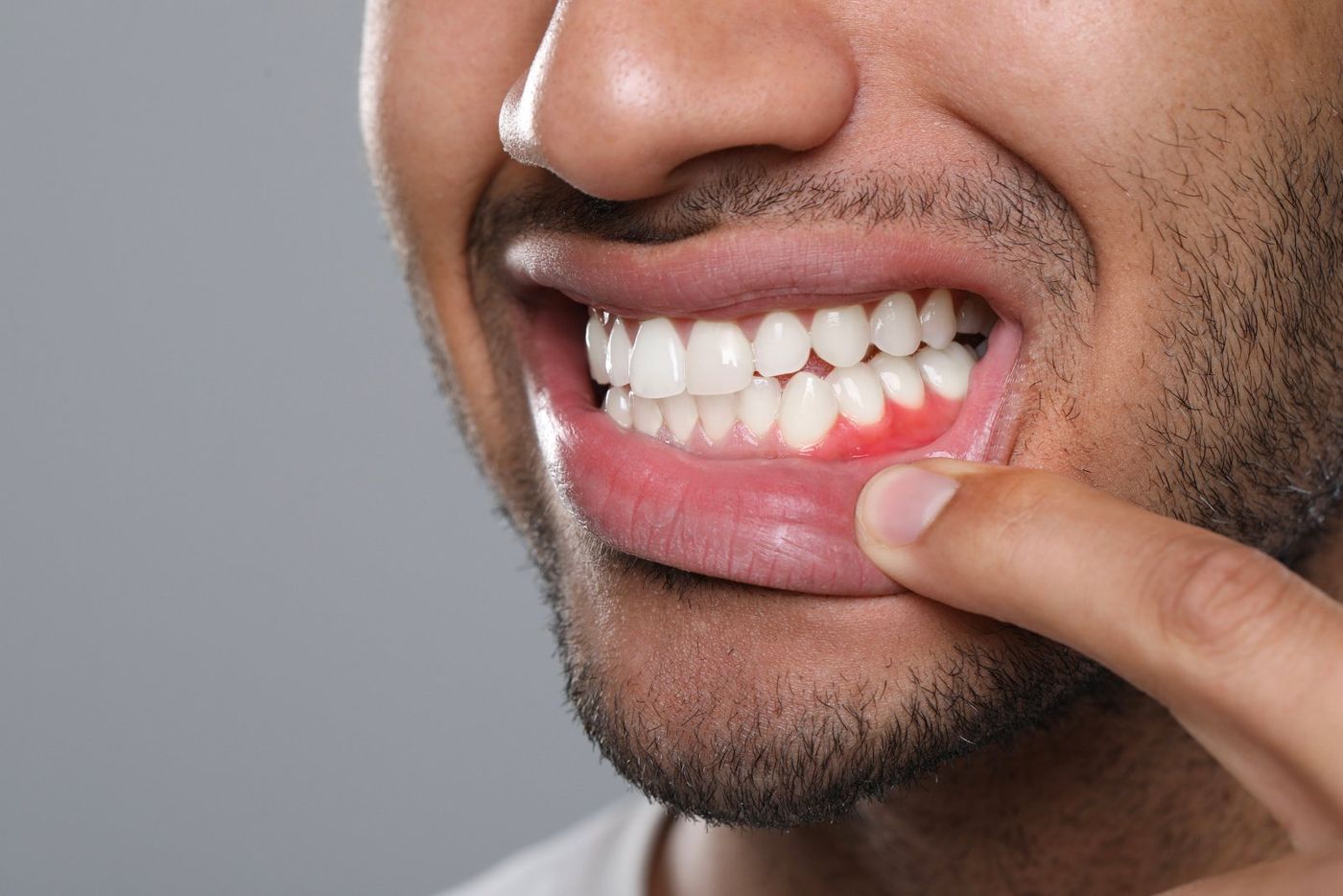
The earliest stage is gingivitis — inflammation confined to the gum tissue alone. Gingivitis causes bleeding during brushing or flossing and is reversible with professional cleaning and improved home care. If left untreated, it can progress to periodontitis, which involves loss of the bone and connective tissue that anchor teeth in the jaw.
Signs to look for
Bleeding gums during brushing or flossing — this is the most common early sign and is not normal, despite how common it is. Gums that bleed are inflamed gums.
Receding gums — teeth appearing longer, roots becoming visible, or spaces opening between teeth at the gumline.
Persistent bad breath — bacteria in periodontal pockets produce volatile sulfur compounds that cause odour that does not resolve with regular brushing.
Loose teeth or changes in bite — in advanced disease, bone loss reduces the support holding teeth in place.
If you notice any of these, book an assessment rather than waiting for your next routine appointment.
Treatment options by stage
Gingivitis is treated with a thorough professional cleaning and improved home care. Most patients see significant improvement — pink, firm, non-bleeding gums — within two to four weeks of consistent brushing and interdental cleaning.
Mild to moderate periodontitis is treated with scaling and root planing (deep cleaning) under local anaesthetic, followed by a periodontal maintenance schedule of three to four appointments per year. This prevents progression and allows monitoring of high-risk sites.
Advanced periodontitis may require referral to a periodontist (gum specialist) for surgical management in addition to ongoing maintenance care.
Gum disease is not inevitable — it is a manageable condition when identified and addressed early. At Dentistry Thirty Two we include a gum assessment at every hygiene appointment. If you are overdue for a check, or if you have noticed any of the signs above, call us at 604.380.3200.
Dentistry Thirty Two serves patients from Maple Ridge, Pitt Meadows, Mission, Port Coquitlam, Port Moody, Langley and the surrounding Fraser Valley.